Just walk into any health store and you will see an entire aisle of nut butters. There’s peanut butter, cashew butter, walnut butter, and there it is...almond butter, always slightly pricier than the others, always packed in a glass jar, content with itself.For those who are not very familiar with almond butter or are wondering …

Just walk into any health store and you will see an entire aisle of nut butters. There’s peanut butter, cashew butter, walnut butter, and there it is…almond butter, always slightly pricier than the others, always packed in a glass jar, content with itself.
For those who are not very familiar with almond butter or are wondering about the pros and cons of almond butter, whether or not almond butter is worth trying, whether almond butter is better than peanut butter, how exactly the almond butter vs peanut butter difference works and if you can even make almond butter yourself, then you need not look any further.
In this brief overview, we will tell you everything you ever wanted to know about almond butter, without overpromising, without overselling and just the facts, based on solid nutritional information.
Table of Contents
What Is Almond Butter?
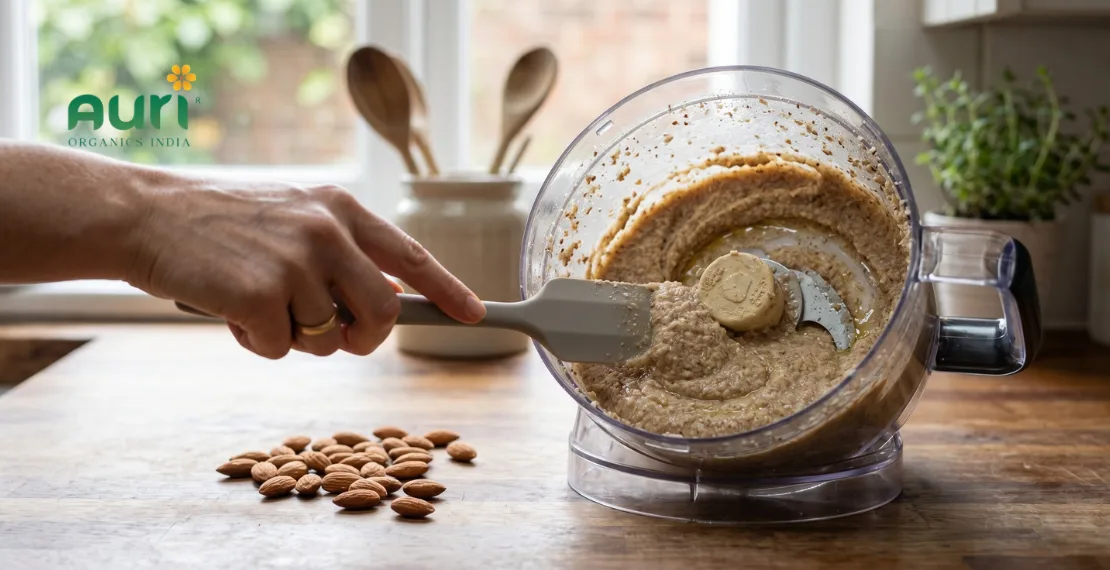
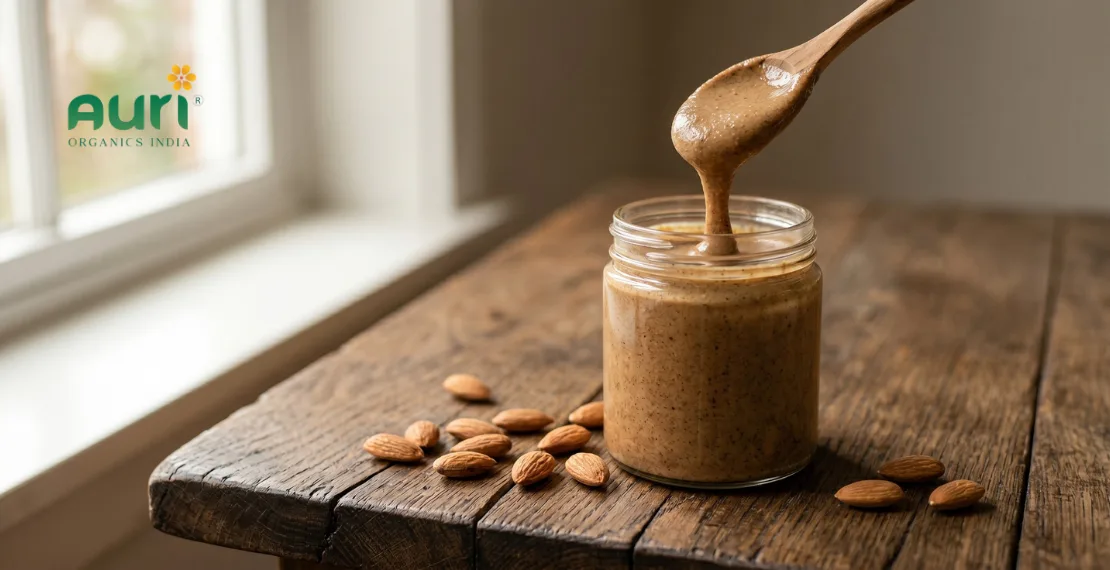
Almond butter is basically a spread, which is made up of completely pulverized almonds and nothing else. Almonds that get ground or blended until their natural oils come to the surface and create the smooth and creamy texture of the almond butter. Sometimes a pinch of salt. Nothing more.
It involves mixing raw or roasted almonds until they fully turn into a fine paste. This requires a lot of patience since the mixture goes through a period where the oils will not come out yet but once it happens, the whole food ends up forming something called butter – and it boasts an unbeatable nutritional content compared to most artificial alternatives.
The key selling point with almond butter lies in more than just the ingredients used; it is what the substance does not have which makes it so special. Refined sugars. Hydrogenated oils. Artificial stabilizers. If the product is done right, then it basically means consuming almonds in their natural form and that is why it should matter greatly, especially since people consume too many foods that have been heavily processed.
In fact, almonds are known to be one of the most nutritionally-dense nuts. Not only do they contain good amounts of fats, protein, fiber, vitamin E, magnesium, and calcium but almond butter allows individuals to get all of this in a convenient way.
Nutritional Value of Almond Butter
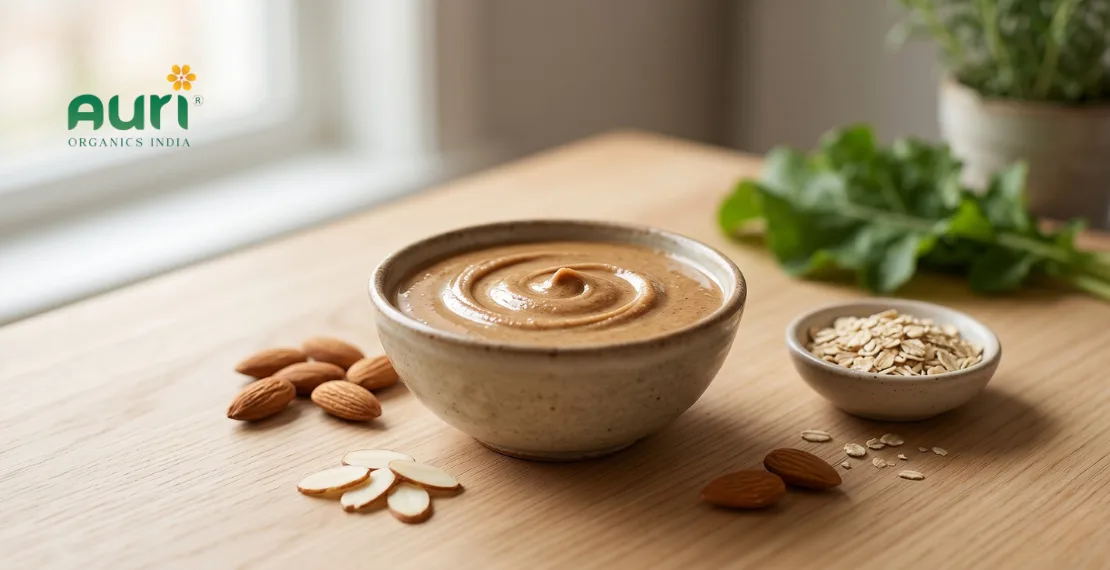
Almond butter is now the staple of healthy kitchens because of a reason: it is actually full of nutrients. It isn’t dependent on marketing and this is apparent with the comparison of almond butter comparison with peanut butter.
- Healthy fats: High of monounsaturated fats (like avocados, olive oil, and avocados) that promote the health of your heart and give you constant energy levels.
- Protein from plants: Not the most important source of protein, but it is the necessary increase to your daily intake through snacks or meals.
- Vitamin E: It is a powerful antioxidant that helps support skin immunity and overall health of cells.
- Magnesium: It helps with performance of muscles, energy levels as well as sleep.
- Fiber: It promotes better digestion, regulates blood sugar levels, and increases satiety.
In conclusion, almond butter can be considered more than a spread. Instead, it should be thought of as a food packed with nutrients that is easy to incorporate into a daily diet.
Almond Butter vs Peanut Butter, The Real Comparison
Which One Should You Choose?
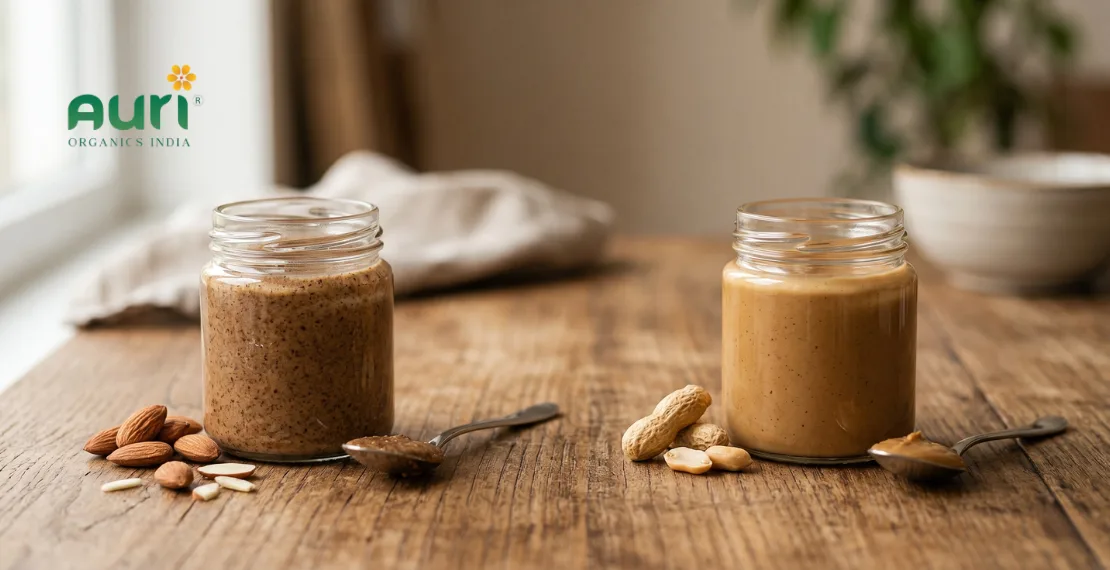
For those who prefer nutritious foods and increased nutritional value, almond butter is the way to go. However, if you’re concerned about cost efficiency and more protein in your diet, peanut butter should serve the purpose.
The Real Benefits of Eating Almond Butter Regularly
However, there are plenty of other benefits you could get from consuming almonds on a regular basis that are not mentioned too often but have been proven by science and researchers:
Supports Heart Health:
With its beneficial fat content, vitamin E and magnesium, almond butter improves your heart function and ensures cholesterol balance in the body.
Contributes to Weight Loss:
As it is rich in fats and fiber, almond butter makes one feel fuller for longer, reducing the need to eat extra snacks, which is especially mentioned when comparing peanut butter and almond butter.
Sustains Energy Levels:
Contrary to sugary spreads, almond butter ensures slow digestion and release of energy into the body, hence it can be used every morning either with bread or for making an almond butter recipe.
Benefits for Skin and Hair:
Due to Vitamin E presence, it promotes healthy skin and stronger hair, this benefit is always listed in peanut butter vs almond butter articles.
High in Antioxidants:
It contains antioxidants that protect your body cells and prevent their oxidation, one of the advantages compared during the debate over almond butter vs peanut butter.
Helpful for Bones:
Due to calcium and magnesium presence, almond butter is beneficial for maintaining bone health and density, one of the important aspects considered while comparing almond butter vs peanut butter.
Whether you’re using it in a simple almond butter recipe or as a daily spread, almond butter offers consistent nutritional value in a way that’s easy to include in your routine.
How to Make Almond Butter (Almond Butter Recipe)
Making your almond butter from scratch is among those tasks that is surprisingly easy once you’ve attempted it. In truth, it’s much more satisfying than buying the jar you’ve bought from the market. With this recipe for almond butter you know exactly what’s into it. There are only almonds, nothing else and the end product is more flavorful, fresher and more authentic.
What You’ll Need:
- Two cups of almonds (raw or roast)
- Salt and a pinch (optional)
- A food processor or powerful blender
That’s it. A great almond butter recipe does not require sugar or added oils. The almonds release naturally their own oils, and you only have to wait for them to release.
How to Make It:
Step 1. Roast the almonds.
Put the almonds in the baking tray, and bake them in an oven at 175° Celsius for about 10-12 minutes. This method gives them an even more nutty flavor and helps blend the almonds. Allow them to cool before proceeding.
Step 2: Mix thoroughly
Add the almonds into your food processor and begin blending. It will initially appear like crumbles. It will then clump and look like it’s not working, but it will continue to work. After a few minutes, it will slowly turn into an extremely smooth and creamy butter. The whole process generally takes between 10 and 12 minutes. It is best to stop every now and then and scrape your sides.
Step 3. Adjust the flavor
When it’s smooth, you can taste the mixture. Add some salt if you’d like. Some people like to add a little cinnamon or honey, but keeping it as plain as possible allows you to be as flexible as possible.
Step 4: Make sure it is properly stored
Place your almond butter in an unclean glass jar. It’s possible to keep it cool for up to a day, however after that it’s best stored in the refrigerator. It generally lasts between 2-3 weeks.
If you notice oil separation, don’t worry, that’s completely natural. Just stir it before using.
A Few Helpful Tips:
- A food processor works better than a regular blender for this
- Avoid adding extra oil unless absolutely necessary
- The secret to a successful almond butter recipe lies in patience. Don’t hurry the process.
When you’ve created it by yourself, you’ll feel the difference right away. Its texture, flavor and freshness, it’s all more authentic. If you put it with almond butter in a peanut butter context homemade almond butter typically appears more clean and natural. This is among the reasons it is a standout from the peanut butter debate between almond butter and peanut butter particularly for those who are focusing on whole, simple ingredients.
How to Use Almond Butter
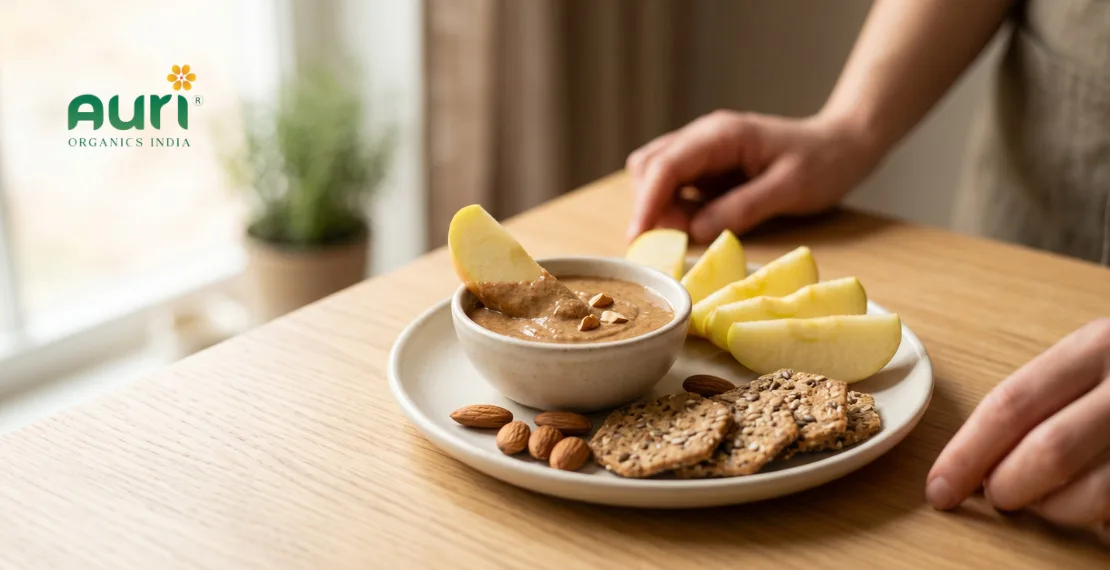
Almond butter is much more versatile than many people initially believe. Its use goes far beyond what is obvious.
For a spread: On whole grain bread or toast almond butter is a nutrient-rich basis for breakfast. If you pair it with slices of fruit, bananas or a drizzle of honey, it’s an extremely satisfying breakfast within five minutes.
In shakes and smoothies: Adding a spoonful of almond butter incorporated into a smoothie provides protein, healthy fats as well as a delicious flavor that can transform a light drink into something that is truly satisfying. It is particularly good with oat milk, banana dates, cocoa, and dates.
In desserts and baking: Almond butter integrates beautifully into energy balls, cookies, brownies, banana bread and a lot of baked goods that need nuts. It provides the moisture and depth of a dish without overpowering the other flavors of recipes.
For dipping or topping: Apple slices and carrots, celery and rice cakes make excellent use of almond butter for dipping. Thinly slathered with warm water lime juice and soy sauce it is also the basis of a great satay sauce to serve noodles or roasted vegetables.
Mixed into oatmeal: Just add it to your bowl of oatmeal and mix it around; the entire bowl will suddenly taste richer and more decadent. This will make the experience of having morning oatmeal seem more like a meal.
For a sauce: Almond butter thinned down by adding warming water, splash of lime along with the addition of soy sauce and some grated ginger make a satay sauce that’s delicious with rice, noodles or roasting vegetables.
Is Almond Butter Better Than Peanut Butter?
The answer is simple: for the majority of people and all health-related goals almond butter is the healthier and healthier choice. The benefit isn’t just marginal. There is more Vitamin E content in almond butter than peanut butter. Vitamin E is an essential nutrient that many diets are lacking in. In addition, the higher calcium and magnesium levels, the higher antioxidant profile and the favourable fat composition the almond butter is the most complete food item. It doesn’t mean that peanut butter is a deficient food.
Pure peanut butter made of 100% peanuts, with no additives, is healthy and is a good alternative. The problem is that the majority peanut butter that is sold in the market isn’t really the same. It’s a processed food that contains the addition of sugar and hydrogenated oil and stabilizers that damage the potential of a nutritious food.
The peanut butter vs almond butter debate that is done honestly and fair, favors almond butter for use in everyday life. If health for the long term is your primary concern for you, almond butter is a smart everyday investment.
If long-term health is the priority, almond butter is the wiser daily investment.
Almond Butter Price Guide
The price of almond butter is usually higher than regular spreads, and there are clear reasons behind it. To begin with, it costs more money to buy almonds as compared to peanuts, hence raising the price of this product. It is because of this reason that almond butter is usually more costly than peanut butter.
Almond butter is usually processed without including oils and other filler ingredients. Companies involved in manufacturing pure products and processing those without any other ingredients involved will incur relatively high costs.
Apart from that, packaging, quality of the ingredients, and reputation of the brand are also significant aspects for pricing. The products, which have organic and quality ingredients involved in their manufacturing, will definitely have a higher price tag.
Price alone does not matter. One should think about the benefits that the product can offer. Almond butter will not be cheaper than peanut butter, but its value is much higher.
How to Buy the Right Almond Butter
The selection process of a good almond butter need not be difficult. As soon as one knows the parameters that make one almond butter better than another, the task of choosing one easily falls into place.
Read the label: It would ideally consist of only almonds. No added sugar, refined oil, or preservative.
Oil separation should occur naturally: The presence of a little oil layer is fine, as it suggests that the product hasn’t undergone excessive processing.
Select minimally processed brands: Minimalist processing ensures that there’s no loss in terms of nutritional value and purity of taste.
Look for transparent brands: Those that reveal everything about their source of almonds and production process.
Watch out for false claims: Words such as “Natural,” or “Healthy” could just be buzzwords without any substance at all.
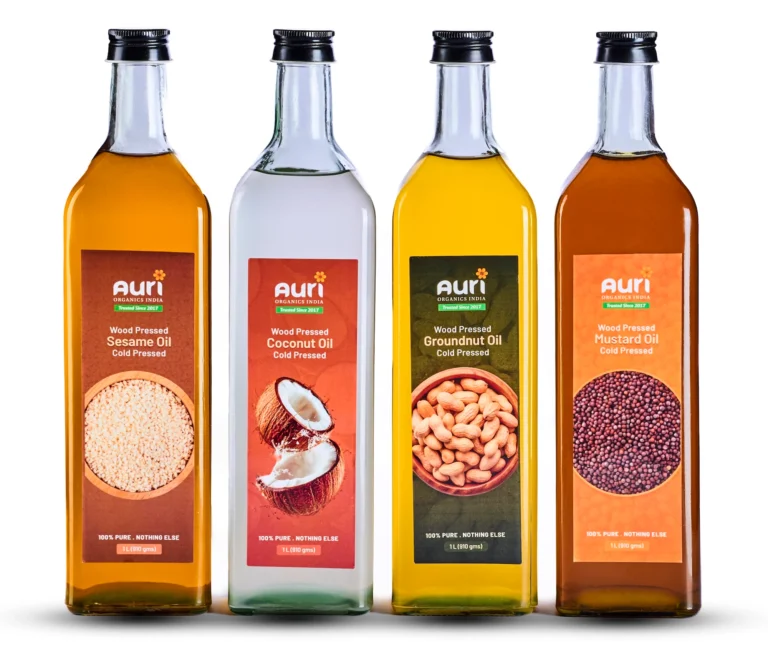
You can evaluate brands by judging their level of consistency. Consistency in brands will always show through their other products. For example, brands that practice clean or traditional processing of their products maintain the same for all their other products. They would have items such as wood pressed sesame oil, wood pressed mustard oil, and wood pressed groundnut oil together with others like cold pressed coconut oil and wood pressed coconut oil.
Brands like AURI ORGANICS INDIA focus on transparency and clean sourcing, making it easier to choose almond butter you can trust.
Common Mistakes When Buying Almond Butter
Such mistakes are common, easy to commit, and just as easily avoidable when one knows where to watch out for them.
- Reading just the front of the packaging. Terms such as “natural,” “wholesome,” and “pure” have no legal significance in food labeling. They can appear on anything, regardless of what is inside. The ingredient list on the back is the only thing that matters, read it every time.
- Choosing based on price alone. The least expensive almond butter is usually cheap for a reason, lower grade almonds, more additives, and more processing. For something you eat regularly, this is not where you cut corners.
- Considering flavoured varieties nutritionally equivalent. Chocolate or honey-vanilla almond butter is a delicacy and not meant to be used for health purposes. Sugar affects its nutritional value. Limit yourself to using flavoured products occasionally and opt for plain products regularly.
- Taking the “almond butter” label to imply quality. Just by looking at the label on the jar does not guarantee you anything. Only the list of ingredients can tell you more about what is in there.
- Improper storage after opening. Unprocessed almond butter has no preservatives. Therefore, it should be kept in the refrigerator for maximum freshness.
Conclusion
The benefits of almond butter don’t come as a health fad. Instead, they represent the revival of traditional foods that are natural, minimally processed, highly nutritious, and useful for regular consumption.
The almond butter vs peanut butter question has a clear answer for most people: almond butter offers superior micronutrients, stronger antioxidant protection, better fat composition, and a cleaner ingredient profile. Peanut butter, in its purest form, is a good food, but almond butter is the more complete one.
Whether you follow a simple almond butter recipe at home or choose a trusted product from a quality brand, the most important thing is to make the choice with intention. Read labels. Understand what you are buying. Choose brands that are transparent about what they make and how they make it.
Brands such as AURI ORGANICS INDIA are worth taking into consideration if you’re seeking that kind of integrity and quality. The switch to almond butter might appear to be a minor change at first, but over time the small changes will make a huge impact on general health.
Still Using Regular Spreads? It’s Time to Upgrade.
Most spreads are filled with hidden sugars and low-quality oils. If you care about what you eat every day, switching isn’t optional — it’s necessary. Choose almond butter that’s clean, honest, and made without shortcuts.
FAQs
What is almond butter and how is it made?
Almond butter is produced through grinding almonds into a butter-like paste. The basic almond butter recipe includes only almonds without any additions of sugar and oil.
Is almond butter healthier than peanut butter?
The almond butter and peanut butter comparison shows that almond butter provides more vitamin E and other minerals.
Is almond butter histamine-free?
It can be moderate in its histamine content as there is great individual intolerance.
Why is almond butter more expensive than peanut butter?
As shown in the almond butter vs peanut butter comparison, almonds are pricier and have specific processing requirements.
Where to buy almond butter?
Select products with clear labels or create your own using a basic almond butter recipe.