The moment you step into a grocery store or log on to an online website for picking up cooking oil, you probably have realized how confusing it can get. Countless brands are vying for attention, boasting about their purity, goodness, and being natural. Amidst all of it, you find yourself wondering if the whole idea …

The moment you step into a grocery store or log on to an online website for picking up cooking oil, you probably have realized how confusing it can get. Countless brands are vying for attention, boasting about their purity, goodness, and being natural. Amidst all of it, you find yourself wondering if the whole idea of investing in wood pressed mustard oil was not worth it after all and if refined oil was not a better option.
This situation has caused a lot more harm than just being confusing. People have suffered the consequences of using adulterated and sub-standard oils while also paying high mustard oil prices. It has become extremely difficult to distinguish between various options because of false labeling and misleading descriptions used by manufacturers. The consequences of using the wrong kind of oil may not show immediately but certainly catch up after some time.
This guide cuts through all of that. By the time you finish reading, you would be fully aware of the exact nature of the wood pressed mustard oil, what makes it different from its refined counterpart, and how it stands out compared to the traditional mustard seed oil which has been part and parcel of the Indian cuisine for many years now.
Table of Contents
What Is Wood Pressed Mustard Oil?
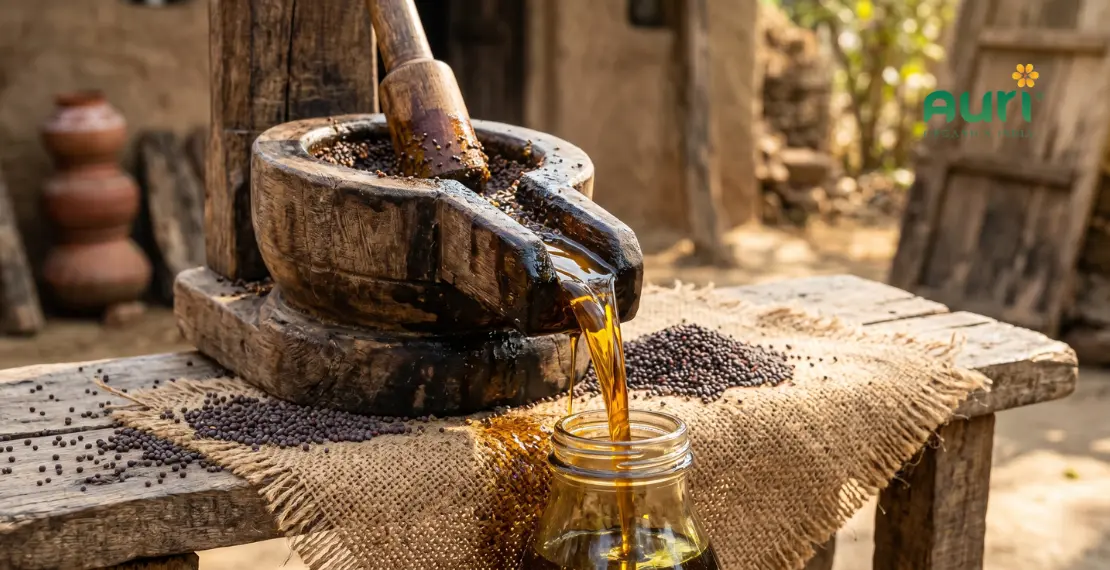
Wood pressed mustard oil is oil extracted from mustard seeds using a traditional wooden press called a kolhu or ghani. The process is slow, mechanical, and deliberately low-heat. No chemicals are used. No external heat is applied. The seeds are crushed, and the oil flows out naturally.
This method has been used in Indian households for hundreds of years. Before industrial refineries existed, every village had a kolhu. Families pressed their oil fresh, used it within weeks, and cooked food that tasted deeply of itself. What we now call mustard seed oil was once simply a daily essential, made locally and trusted without question.
What makes this process special is what it does not do.
Because the temperature stays low throughout, none of the natural compounds in the seed are destroyed. The result is a true mustard seed oil in the most honest sense of the word:
- Omega-3 and omega-6 fatty acids stay intact
- Vitamin E survives the extraction process fully
- Glucosinolates are responsible for the sharp pungency and anti-inflammatory properties and are completely preserved
- Natural antioxidants remain active and bioavailable
This is also what the term kachi ghani refers to. Cold or ambient temperature pressing that keeps the oil alive with everything the seed was carrying. The process produces less oil compared to industrial extraction, which contributes to the higher prices associated with mustard oil produced using traditional methods. There are many people who prefer organic mustard oil since it guarantees that the seeds have no contact with chemicals.
However, the difference between these two is quite remarkable. Traditional mustard seed oil will have all of its qualities intact and the process will preserve them to a greater extent when compared to an industrial method.
What Is Refined Mustard Oil?

As the name suggests, refined mustard oil uses mustard seeds but the rest of the procedure involves making a product that will have maximum output and long shelf life.
In industrial refining, seeds are processed using high heat and chemical solvents to extract maximum oil in minimum time. The crude oil then goes through multiple additional stages:
- Bleaching to remove colour
- Deodorizing to strip out the natural smell
- Neutralizing to remove acidity
- Chemical treatment to extend shelf life
By the time refined mustard oil reaches your bottle, it looks clean, smells neutral, and lasts a long time on the shelf. From a commercial standpoint, that is ideal. From a health standpoint, it raises concerns.
Every single processing stage strips something out. The antioxidants go. The natural fatty acids are altered. The glucosinolates that give mustard oil its anti-inflammatory and antimicrobial character are completely removed. What remains is essentially a fat with a long shelf life and very little nutritional depth compared to traditional options.
Refined oil dominates the market because it is cheap to produce and easy to scale. This is why the mustard oil price for refined variants is usually much lower than that of traditionally extracted oils. However, lower cost often reflects reduced quality. Even with the organic label for mustard oil, its heavy processing means that some of the positive effects of sourcing have been compromised.
In conclusion, the key here is knowing how much one is sacrificing for the sake of price. It is true that mustard oil prices can be low, but that is at the detriment of health, quality, and proper sourcing.
Wood Pressed Mustard Oil vs Refined Oil
There are several things to take into account when analyzing the two options, despite their seeming similarities. Let us compare these types of mustard oil in terms of the extraction process used and nutritional value.
Extraction process:
Wood pressed oil extraction uses processes that help preserve the naturalness of the seeds. On the contrary, refined oil production requires heating and chemical substances usage followed by several processing steps.
Nutritional Benefits:
One of the greatest differences between wood pressed and refined oil is the number of vital nutrients. The former oil contains all necessary vitamins, antioxidants, and other essential ingredients in full volume.
Chemicals:
In the process of extracting, it does not require any chemicals, thus making it more natural than the refined variant. However, the latter is often exposed to chemical processing in order to provide it with a standardized appearance and a longer shelf life.
Smell and Taste:
Wood pressed oil has an intense smell and flavoring. Refining the latter makes it tasteless; some might appreciate such characteristics but still there is nothing to compare with traditional oil.
Shelf Life:
Refined oils would be more durable due to their processes, but wood pressed oils could have lesser durability yet more nutrition.
Impact on Health:
Gradually, consumption of natural oils is better for maintaining good health. Wood pressed oils contain many nutrients which help in improving the functions of the body including digestion and heart-related health benefits while refined oils do not provide these advantages.
The topic in question here is more relevant when seen from a larger perspective. Similar is the case with Cold Pressed Coconut Oil and Wood Pressed Coconut Oil which is discussed nowadays. In the same way, this topic would be important as part of the discussion related to What Is A2 Ghee?
Benefits of Wood Pressed Mustard Oil
This is where wood pressed mustard oil truly stands out, and where refined oil simply cannot match its value.
1. Rich in Natural Nutrients and Antioxidants
This ensures that all the nutritional value inherent in the seeds is retained. All vitamins, antioxidants, and minerals are preserved, thus ensuring that the body remains protected against oxidative damage. This is why mustard oil retains most of its nutritional value when compared to its highly refined counterparts.
2. Beneficial for Heart Function
Mustard seed oil is renowned for its excellent fatty acid composition. This includes:
- A well-balanced ratio between omega-3 and omega-6 fatty acids
- A high concentration of monounsaturated fatty acids
- Intrinsic substances that enhance cell health
- Frequent consumption of organic mustard oil during meals facilitates the maintenance of normal cholesterol levels and ensures optimal cardiovascular health.
3. Aids in Proper Digestion
Another less acknowledged benefit of mustard oil is its digestive functions. Organic mustard oil triggers the secretion of digestive enzymes and enhances gut motility. In addition, it possesses mild antimicrobial properties that positively affect digestion in the long run.
4. Anti-Inflammatory Properties
The natural compounds present in wood pressed mustard oil, especially glucosinolates, have strong anti-inflammatory effects. These are responsible for the oil’s pungent aroma. In refined oil, these compounds are removed, which means the benefit is lost entirely. This is one reason why many people are willing to pay a higher mustard oil price for better quality.
5. Beneficial for Skin and Hair
Wood pressed mustard oil is not just for cooking. It has been used for generations as a natural remedy for skin and hair. It deeply nourishes the skin, strengthens hair roots, and reduces dryness. Choosing organic mustard oil ensures that even topical use remains free from harmful chemicals.
Is Wood Pressed Mustard Oil Really Healthier Than Refined Oil?
Yes, and the discrepancy in nutrition value of the two oil types is quite notable.
The refined oil requires several procedures of processing and thus lacks most of the natural compounds of its composition. The result will be mostly an oil substance rich in fatty acids but lacking in any additional useful substances. On the other hand, wood pressed mustard oil will contain all natural components of the initial material and will be beneficial for health.
Consequently, by choosing such oils for cooking on a regular basis, you provide your body with the necessary vitamins, antioxidants and other useful compounds. Meanwhile, using processed mustard oil will deprive you from these benefits.
This also explains why mustarded oil price for wood pressed varieties is higher. When you purchase a more valuable product, you should pay for it appropriately. Even when comparing organic varieties, the extraction procedure is still important.
Where safety is concerned, using processed oils poses no threats at all, but it also has no long-term health advantages whatsoever. In case you frequently prepare your meals, changing the type of oil being used in the kitchen is a simple thing to do.
In the end, choosing a slightly higher mustard oil price often means choosing better nutrition, better quality, and a smarter long-term decision for your kitchen.
Wood Pressed Mustard Oil Price Guide
Mustard oil price varies quite a bit, and understanding why helps you spend your money on something real rather than something that just looks good on the shelf.
The following are the reasons for the price tag associated with the best wood pressed mustard oil:
- Quality of the seeds: The best wood pressed mustard oil begins with the use of premium-quality mustard seeds. High-quality ingredients translate into more costs.
- Extraction process: Extracting oil using the wooden kolhu takes a long time and produces a lower quantity of oil per kg of seeds compared to other methods.
- Source tracking: Companies who know exactly where their mustard oil seeds come from have invested in the source tracking, and they are willing to pay for it in terms of price.
- Tests and certification: Quality tests and organic certification contribute to increased prices, but they reflect the commitment of the company towards quality.
- Packaging: Wooden pressed mustard oil sold in glass packaging costs more than plastic but offers much better preservation.
The most important thing to understand about mustard oil price:
A genuine cold pressed wood pressed mustard oil cannot be priced the same as mass-produced refined oil. If something labeled as wood pressed is too cheap, compromises have likely been made in the extraction or the quality of the mustard seed oil.
Understanding the mustard oil price helps you spot this difference. When something is less expensive, it usually indicates lower quality, whereas real mustard oil is a representation of better ingredients and nutrition.
Being willing to pay for good oil doesn’t necessarily mean paying more; on the contrary, it means choosing something which will improve your cooking experience.
How to Identify Pure Wood Pressed Mustard Oil
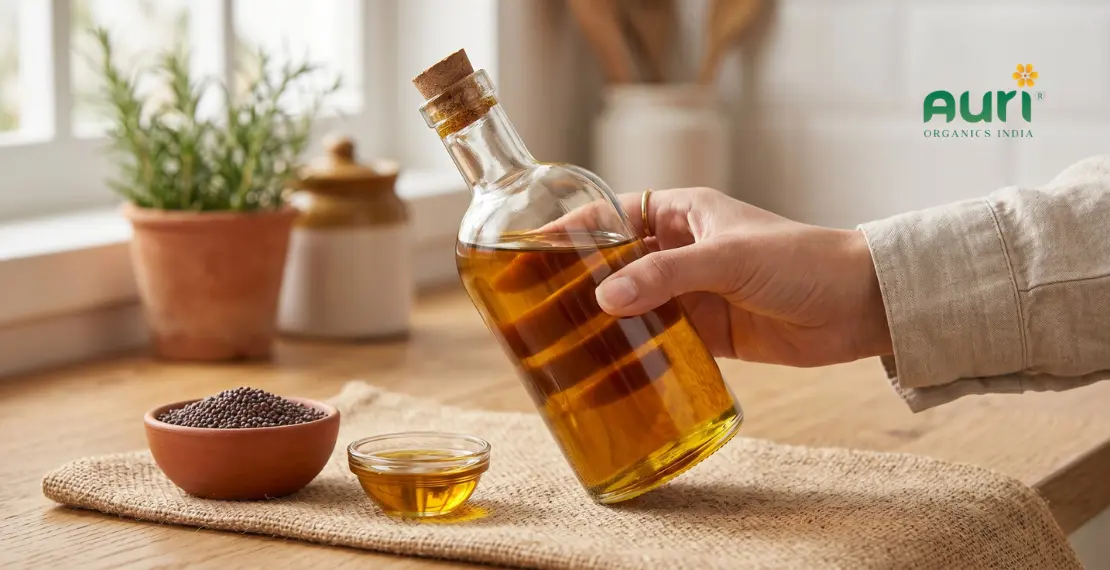
The first defense mechanism against adulteration is to have a clear idea about the nature of authentic oil based on its appearance, odor, and texture.
Begin with the odor. The scent of pure wood press mustard oil has an intense and strong smell that seems to sting the nose. If there is no distinct odor or the odor is faint, then most probably the oil is diluted or processed. Real mustard seed oil should be instantly recognizable the moment you open the bottle.
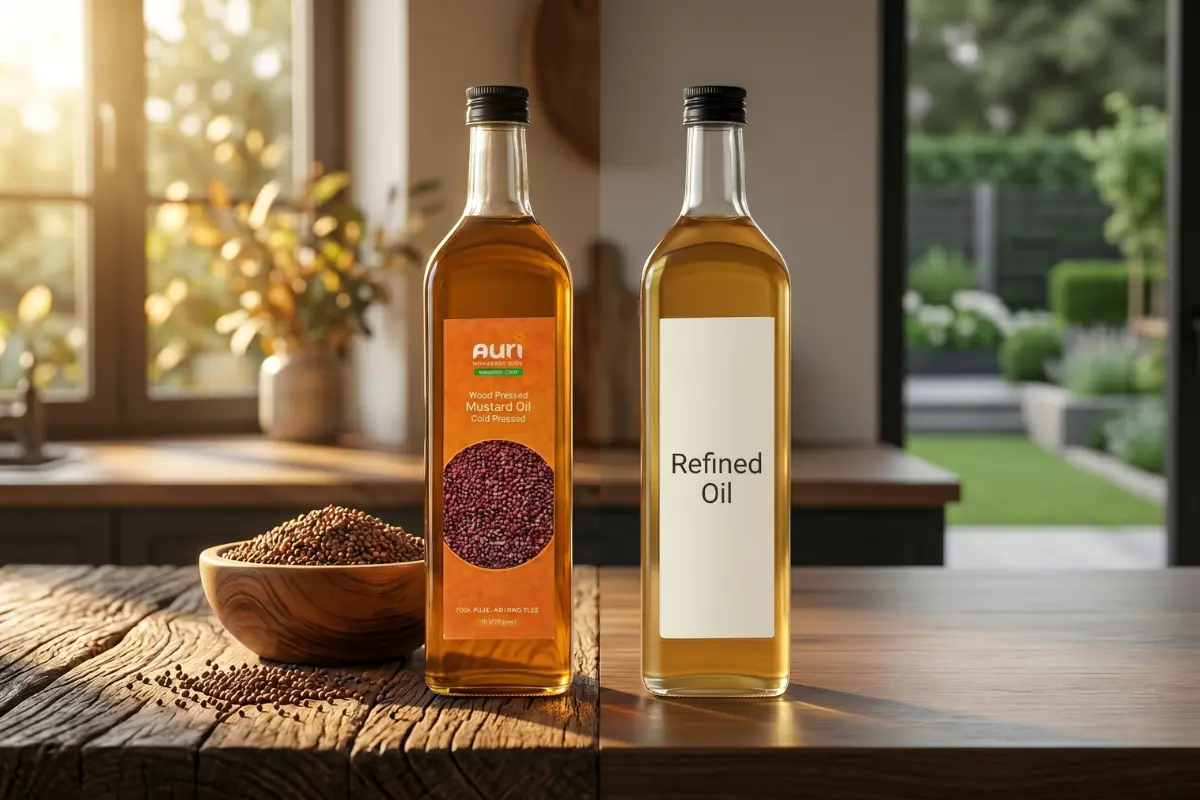
Next, check the colour. Authentic oil ranges from deep yellow to amber. Pale or overly clear oil often indicates refining. This visual cue is one of the easiest ways to identify quality.
Then, feel the texture. It should have a slight richness and body, not too thick, but not watery either. Compared to refined oils, genuine organic mustard oil feels more substantial.
Finally, read the label carefully. Look for:
- Clear mention of wood pressed, cold pressed, or kachi ghani
- Details about seed sourcing
- Realistic shelf life (usually shorter than refined oil products)
- Number of batches and date of production
- Stay away from products that base their claim on ambiguous statements. The real brand of organic mustard oil must be transparent in its production process.
Moreover, knowing all these tips, you will easily determine whether the product is worth its price. After all, any suspiciously cheap mustard oil will never be natural.
How to Choose the Best Wood Pressed Mustard Oil
Choosing the best mustard oil is quite easy but requires much attention from customers. The mustard seed oil quality significantly relies on production processes and locations.
- Begin with the mode of production. A quality mustard seed oil is normally extracted using cold pressing or wood pressing techniques. It means that a good brand should have this clearly indicated.
- Consider the source of seeds. Well-pressed seeds make a good starting point for getting quality mustard seed oil. Many customers have been turning to buy organic mustard oil because they believe it contains natural seeds.
- Lastly, you should check packaging. Glass bottles are preferable to plastic containers since they reduce contamination. Cheaper plastic packaging can affect quality over time.
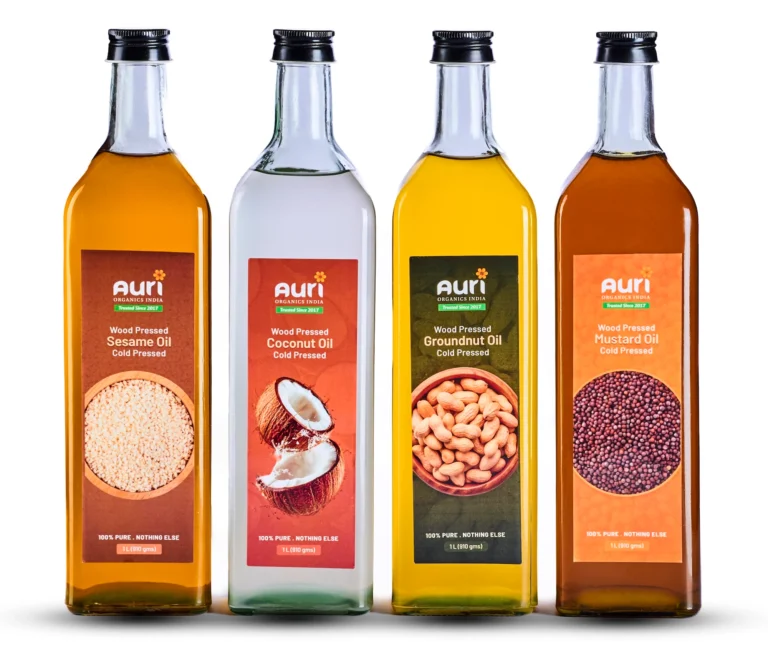
Ensure that the brand offers transparency regarding sourcing, process, and standards since it makes it easy for you to have confidence in the product. Some of the brands to consider include AURI ORGANICS INDIA whose primary concern is the use of traditional methods in making and sourcing products.
The cost can also be considered in buying any item such as mustard oil. The cost of the product may be variable. However, it is important to consider realistic mustard oil prices to ensure that you purchase the highest quality.
Common Mistakes When Buying Mustard Oil
The purchase of mustard oil may look like an effortless job, but there are some mistakes that can compromise its quality and health status.
Choosing price:
Low-cost mustard oil implies that its quality is poor. Hence, the purchaser needs to evaluate its total worth rather than its price only.
Favoring refined oil:
Refined oils are considered purer by many people; however, they do not contain valuable nutrients.
Ignoring product labels:
Important details about extraction, sourcing, and authenticity are often overlooked, leading to poor choices.
Falling for fake “cold pressed” claims:
Not all “cold pressed” oils are natural and truly cold pressed. When choosing mustard oil that is said to be organic, make sure to research thoroughly before purchasing.
By recognizing the above common mistakes, you can take the right step towards purchasing quality mustard oil.
Conclusion
The distinction between wood-pressed mustard oil vs refined oil isn’t solely technical. It directly affects your health. True mustard seed oil keeps its essential nutrients, antioxidants and beneficial compounds, whereas refined oil loses the majority of its nutritional value when processed.
Although the price for mustard oil could be higher when purchasing authentically produced products, it is a reflection of the quality, purity and the care that goes into its manufacturing.
The choice of organic mustard oil guarantees a cleaner source and greater long-term results.
When you purchase oil, keep an eye on the transparency of your purchase, the source and extraction techniques rather than simply price. Making the right decision will help your health each and every day.
The cooking oil you use isn’t an easy choice. It can affect your health in the course of time. Be careful, and pick the best quality over the shortcuts.
Still Using Refined Oil Without Knowing What It Does to Your Health?
Choose wood pressed mustard oil that keeps its natural nutrients, real aroma, and traditional goodness intact. Make a smarter switch for your kitchen with oil that is pure, clean, and worth every drop.
FAQs
What is the difference between wood pressed mustard oil and refined oil?
Wood pressed mustard oil is prepared through conventional techniques, hence maintaining the presence of all its nutrients along with its aroma. Refined oil, on the other hand, is processed extensively, losing much of its taste as well as nutritional value. The quality of mustard oil can be determined from the mustard oil price since the quality of the product will definitely influence the price.
Is wood pressed mustard oil safe for everyday cooking?
Yes, it is safe to use mustard oil for daily purposes, provided you keep the quantity within limits. This oil also has an appropriate smoke point, making it ideal for cooking regularly. You should always opt for a high quality organic mustard oil to reap more health benefits from this source.
Why is wood pressed mustard oil expensive?
Yes, since it is safe to use such oil in your everyday cooking because it has the appropriate smoke point and other qualities needed for everyday cooking. The choice of organic mustard oil ensures that there will be fewer chemical components.
How can I check if mustard oil is pure?
Pure oil emits a strong and pungent odor and exhibits a yellowish color. Make sure you read the label before purchasing. Organic mustard oil always highlights the source and manufacturing process used. This makes it easier for you to differentiate between genuine and fake products.
Is organic mustard oil better than regular mustard oil?
Yes, organic mustard oil is made from mustard seeds without the use of pesticides, therefore being healthier. Even though the mustard oil price is relatively high, it guarantees high-quality production. Besides, a well-sourced mustard seed oil offers you more natural advantages than the other types.