In Indian kitchens, ghee has always been more than just an ingredient. Its rich aroma, golden colour and familiar taste bring warmth to everyday meals, from freshly made rotis to traditional sweets. But behind a jar of good ghee lies a process that can make all the difference: the way it is prepared.The traditional Bilona …

In Indian kitchens, ghee has always been more than just an ingredient. Its rich aroma, golden colour and familiar taste bring warmth to everyday meals, from freshly made rotis to traditional sweets. But behind a jar of good ghee lies a process that can make all the difference: the way it is prepared.
The traditional Bilona method is valued for its careful, time-honoured approach to making A2 cow ghee from milk. When combined with milk from indigenous Gir cows, it creates a product that connects traditional food practices with modern preferences for thoughtfully sourced ingredients.
At Auri Organics, the journey from Gir cow milk to golden ghee reflects an appreciation for traditional preparation and authentic flavours. Let’s explore how the Bilona method works, what makes it distinctive and what to look for when choosing your ghee.
Table of Contents
What Is the Traditional Bilona Method?
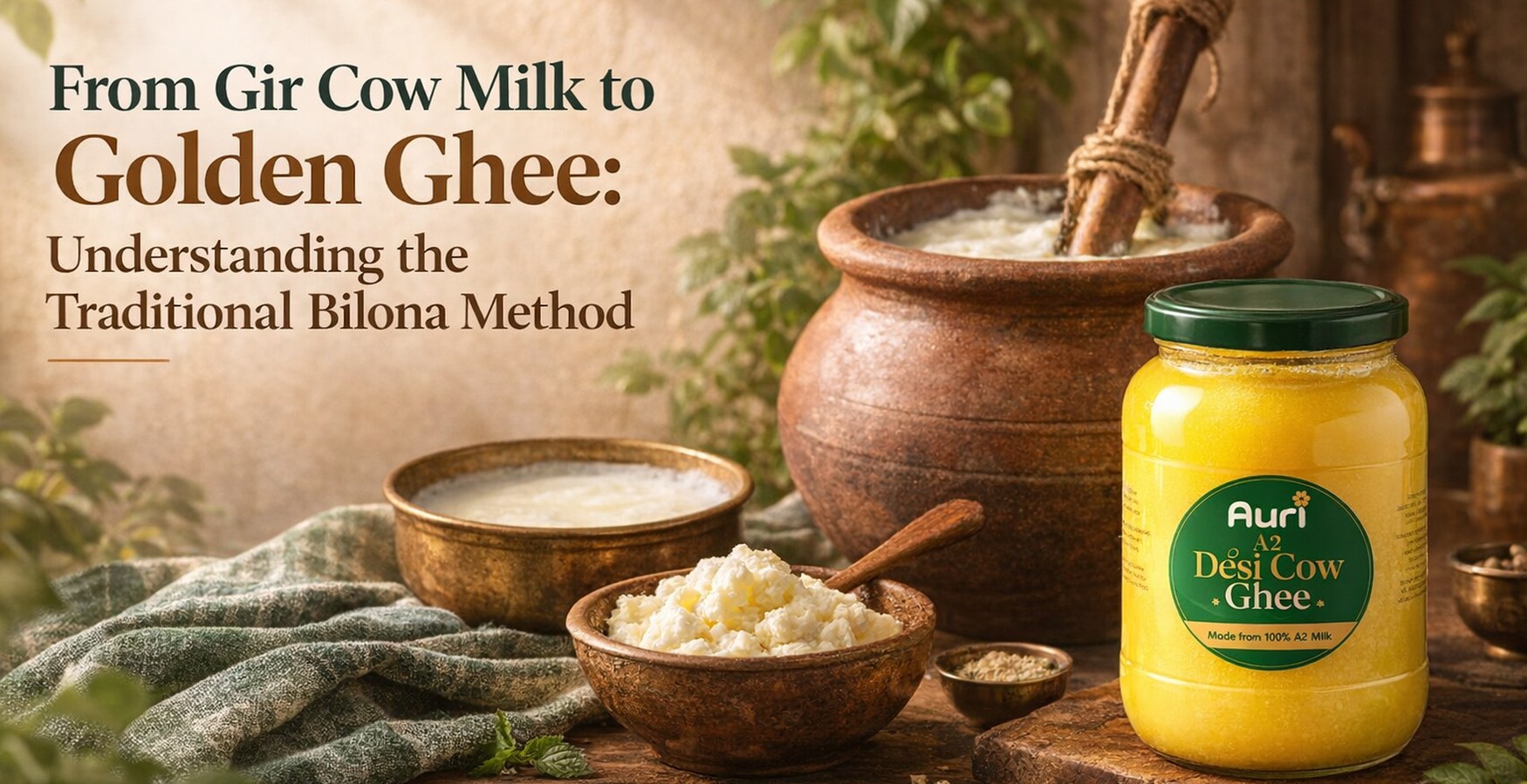
The Bilona method is a traditional process of making ghee that begins with milk rather than commercially separated cream or butter. The milk is first converted into curd, which is then churned to separate butter. This butter is slowly heated until the water evaporates and the milk solids separate, leaving clarified butterfat.
Unlike processes that begin directly with cream, the traditional curd-churning approach involves several distinct stages. Each stage contributes to the final product’s aroma, flavour and texture.
The process requires attention to temperature, churning and heating. Although the exact practices can vary between producers, the central principle remains the same: transforming milk into curd, curd into butter and butter into golden pure A2 cow ghee .
Why Does Gir Cow Milk Matter?
Gir cows are an indigenous Indian cattle breed known for their distinctive appearance and importance in traditional dairy farming. Their milk is used to make a variety of dairy products, including ghee.
Milk composition can vary depending on the animal, its feed, stage of lactation and other factors. These differences, together with preparation techniques, can influence the flavour and characteristics of the finished ghee.
A2 cow ghee is made from milk sourced from cows that produce the A2 variant of beta-casein, a milk protein. Gir cows are commonly associated with A2 milk, but a breed name alone is not proof of a product’s A2 status. Responsible sourcing and appropriate verification remain important.
Auri Organics describes its ghee as being made from Gir cow milk sourced from its Hyderabad farm, combining indigenous dairy sourcing with traditional preparation practices.
From Milk to Ghee: How the Bilona Process Works
The traditional Bilona process involves several stages, each playing an important role in producing the final ghee.
Collecting Fresh Gir Cow Milk
The process begins with fresh milk from Gir cows. Careful milk handling and hygienic collection are essential for maintaining quality throughout the preparation process.
For consumers, knowing where the milk comes from and how it is handled can help them make informed choices when buying pure A2 cow ghee.
Turning Milk into Curd
The milk is heated and cooled to a suitable temperature before a starter culture is added. It is then left to set into curd.
This stage forms the foundation of the traditional Bilona process ghee. The quality of the milk, the culture used and the conditions during fermentation can influence the characteristics of the curd.
Churning the Curd
Once the curd is ready, it is churned to separate the butter from the remaining liquid. Traditional churning techniques are an important part of the process and distinguish this approach from methods that start with commercially separated cream.
The resulting butter is then collected for the next stage.
Slowly Heating the Butter
The butter is heated carefully to remove its water content and separate the milk solids. As the process continues, the mixture develops the familiar aroma and golden appearance associated with ghee.
Temperature control is important because excessive heating can affect flavour, colour and quality.
Filtering and Storing the Ghee
Once the ghee is ready, the separated milk solids are removed, and the clarified fat is allowed to cool before being stored in a clean, suitable container.
Proper handling, packaging and storage help preserve the product’s quality. The finished Bilona ghee can then be used in everyday cooking and traditional recipes.
What Makes Bilona Ghee Different from Regular Ghee?
The main difference lies in the preparation method rather than the final ingredient alone.
Traditional Bilona ghee is made by setting milk into curd, churning the curd into butter and heating that butter to obtain ghee. Other production methods may use cream or butter obtained through different dairy-processing techniques.
Both approaches can produce good-quality ghee when the ingredients are pure and the process is properly controlled.
It is also important to distinguish between two terms:
- A2 desi cow ghee describes ghee made from milk sourced from cows producing A2 beta-casein.
- Bilona ghee describes a traditional preparation method.
A product can be both A2 and Bilona when it meets both descriptions. However, the Bilona method alone does not establish that the milk is A2, and traditional preparation does not automatically guarantee superior nutritional benefits.
How Can You Use A2 Desi Cow Ghee in Everyday Meals?
One reason ghee remains popular in Indian households is its versatility. Its rich flavour works well in simple meals as well as festive recipes.
Here are a few easy ways to enjoy A2 desi cow ghee:
- Add a small amount to dal, khichdi or steamed rice.
- Spread it lightly over freshly prepared rotis.
- Use it for tempering spices in traditional Indian dishes.
- Include it in homemade halwa, laddoos and other sweets.
- Use it in suitable sautéing and cooking applications.
Ghee is a concentrated source of fat and contains saturated fat, so portion size matters. Enjoy it in moderation as part of a varied, balanced diet rather than treating it as a health remedy.
What Should You Check Before Buying Bilona Ghee?
When choosing ghee, look beyond its colour or packaging. A few simple checks can help you make a more informed decision.
Milk sourcing: Look for clear information about the cows and the source of the milk.
Preparation method: If you prefer traditional Bilona preparation, check whether the brand explains how its ghee is made.
Product transparency: Review the ingredients, packaging details and storage instructions.
Quality and hygiene: Choose products from brands that communicate their production and handling practices clearly.
Brand information: If you are exploring Auri Organics products, visit the official Auri Organics website to review the available product information and learn more about the brand’s approach to sourcing and preparation.
Choosing carefully sourced farm fresh products and understanding their production methods can help you make decisions that align with your preferences. However, terms such as organic, natural and farm fresh should be supported by appropriate product information rather than assumed from the branding alone.
Final Thoughts
From fresh Gir cow milk to a jar of golden ghee, the traditional Bilona method represents a careful, multi-stage approach to dairy preparation. Setting the milk into curd, churning it into butter and slowly heating that butter creates the distinctive flavour and aroma that many people appreciate in traditional ghee.
When selecting A2 cow ghee, consider both the milk source and the preparation process. Clear sourcing information, transparent production practices and proper handling are important factors in choosing a product for your kitchen.
At Auri Organics products , the focus on Gir cow milk and traditional preparation reflects the continued place of familiar Indian food practices in modern homes. Understanding the journey behind your ghee can make every choice more informed, from everyday cooking to preparing meals for special occasions.
FAQ
What is the traditional Bilona method of making ghee?
The traditional Bilona method involves converting milk into curd, churning the curd to separate butter and slowly heating the butter to remove water and separate milk solids. The remaining clarified fat is filtered to produce ghee.
Why is Gir cow milk used to make A2 cow ghee?
Gir cows are an indigenous Indian breed commonly associated with A2 milk. However, the A2 status of a product depends on the milk’s protein variant, not simply the breed name. Reliable sourcing and appropriate verification are important.
Is Bilona ghee better than regular ghee?
Not necessarily. Bilona describes a traditional preparation method, while regular ghee may be produced using different methods. Both can be suitable cooking ingredients when properly made. There is insufficient evidence to conclude that Bilona ghee is universally healthier.
Can A2 desi cow ghee be used every day?
Yes, most people can include ghee in their daily meals in moderate amounts, depending on their dietary needs. Since ghee is high in fat and contains saturated fat, portion size and overall dietary balance are important.
How can I identify good-quality Bilona ghee online?
Check the milk source, preparation method, ingredient information, packaging and storage instructions. Choose a brand that provides transparent product details. You can visit the Auri Organics website to explore its available offerings and product information.