Ghee has always held a special place in Indian kitchens. From adding a rich aroma to dal and khichdi to making traditional sweets, this golden ingredient brings flavour and warmth to everyday meals. Today, however, choosing ghee involves more than picking up a jar from the grocery shelf. With options such as A2 cow ghee, …

Ghee has always held a special place in Indian kitchens. From adding a rich aroma to dal and khichdi to making traditional sweets, this golden ingredient brings flavour and warmth to everyday meals. Today, however, choosing ghee involves more than picking up a jar from the grocery shelf. With options such as A2 cow ghee, bilona ghee and regular ghee available, understanding the differences can help you make a more informed choice.
At Auri Organics, the focus is on traditional preparation, thoughtful sourcing and bringing authentic food experiences closer to your home. So, if you are wondering whether A2 ghee is different from regular ghee, here is what you should know before making your choice.
Table of Contents
What Is A2 Cow Ghee?
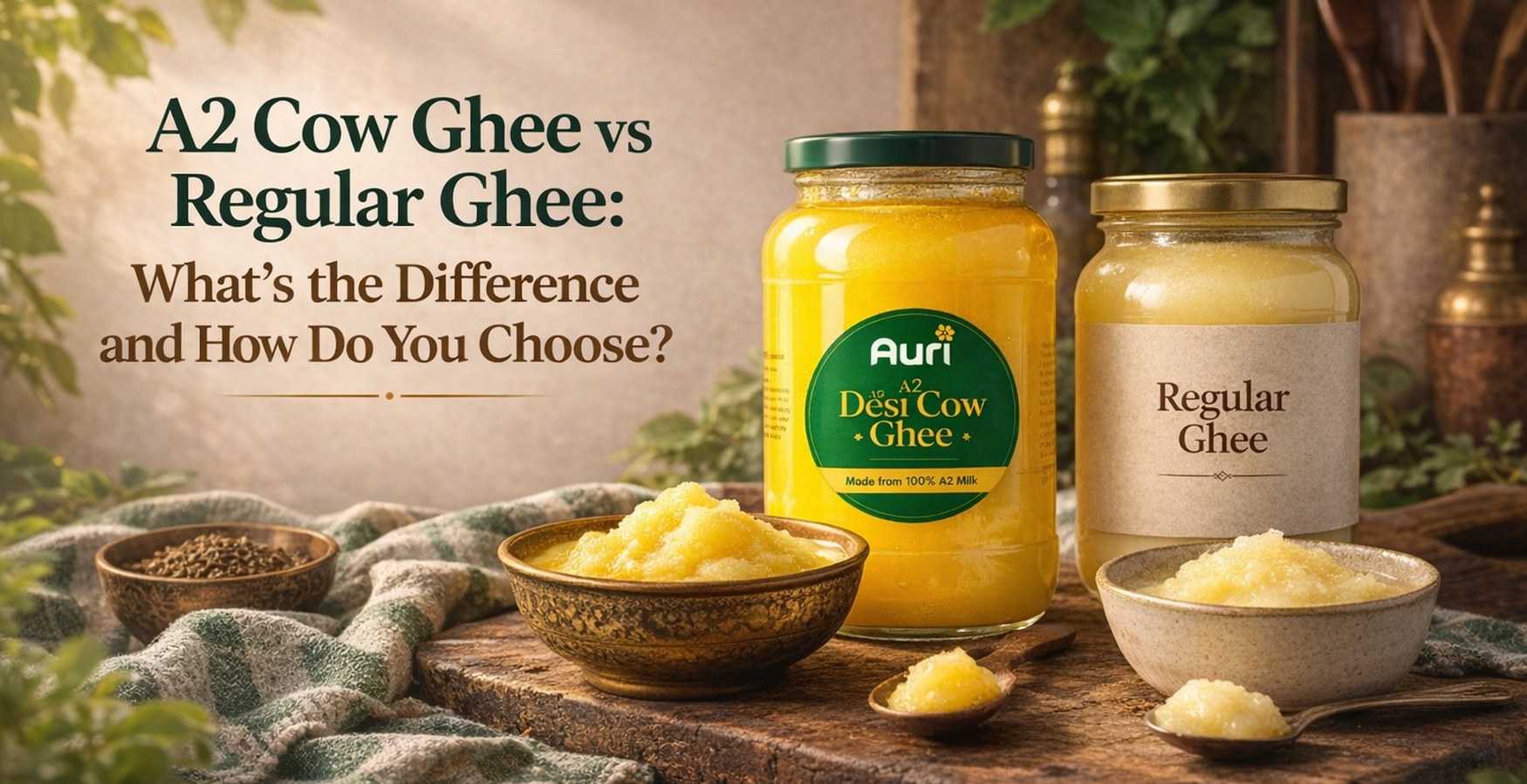
A2 cow ghee is made from milk sourced from cows that produce the A2 variant of beta-casein, a protein naturally found in milk. Indigenous Indian breeds, including Gir cows, are commonly associated with A2 milk.
The quality of the finished ghee also depends on factors such as the animals’ diet, milk handling, processing methods and product purity. Therefore, it is important to look beyond the label and understand how the ghee is sourced and prepared.
Auri Organics makes its pure A2 cow ghee using milk from native Gir cows raised on its Hyderabad farm. The brand follows a traditional preparation process that reflects the care and craftsmanship behind its products.
What Is Regular Ghee?
Regular ghee is clarified butter made by heating butter or milk fat to remove most of its water and milk solids. It is widely used in Indian households for cooking, sautéing, tempering spices and preparing traditional dishes.
Depending on the brand, regular ghee may be made from cow milk, buffalo milk or a mixture of dairy sources. Its production method can also vary, from traditional techniques to modern commercial processes.
Regular ghee can still be a good choice for everyday cooking when it is pure, properly prepared and suitable for your needs. The key is to check the source, ingredients and quality information rather than assuming that every regular ghee is the same.
A2 Cow Ghee vs Regular Ghee: Key Differences
| Feature | A2 Cow Ghee | Regular Ghee |
|---|---|---|
| Milk source | Milk from cows verified to produce A2-type beta-casein | May come from different dairy sources |
| Preparation | Can be made using traditional or modern methods | Can also use traditional or modern methods |
| Taste and aroma | Depends on breed, feed and preparation | Depends on the milk source and processing |
| Texture | May be grainy or smooth | May be grainy or smooth |
| Price | May cost more due to sourcing and production | Varies by brand and quality |
| Best selection approach | Check milk-source details and production practices | Check ingredients, purity and sourcing |
How Is Bilona Ghee Different?
The Bilona ghee method is a traditional process in which milk is cultured into curd, the curd is churned to separate butter, and the butter is slowly heated to obtain ghee.
This method is valued for its careful, small-batch preparation and distinctive aroma. The final flavour and texture depend on the milk, churning process and heating conditions.
Auri Organics follows this traditional approach for its A2 desi cow ghee, using milk from its Gir cows and slow cooking to create a rich, aromatic product.
Remember, the Bilona method describes how ghee is made; it does not, by itself, guarantee that a product is A2 or nutritionally superior.
What Are the A2 Cow Ghee Benefits?
Ghee is a concentrated source of fat and provides energy. It also contains small amounts of fat-soluble vitamins, depending on its source and preparation.
Some reasons people choose products associated with A2 ghee benefits include:
- Traditional food practices: It fits naturally into familiar Indian meals and cooking traditions.
- Rich flavour: Its aroma can enhance rotis, dal, khichdi and homemade sweets.
- Versatile cooking: It can be used for tempering spices, sautéing and preparing traditional recipes.
- Careful sourcing: Buyers can choose products that provide information about the cows, milk source and preparation process.
However, it is important to understand that research has not established that A2 ghee is universally healthier than regular ghee. Ghee is primarily fat, and the A2 label alone does not prove additional health benefits. Both types should be consumed in moderation as part of a balanced diet.
How to Choose the Right Ghee for Your Kitchen
Choosing between A2 cow ghee and regular ghee becomes easier when you know what matters most to you.
1. Check the milk source. If you prefer ghee made from indigenous cow milk, look for clear sourcing information and evidence supporting A2 claims.
2. Understand the preparation method. If traditional craftsmanship matters to you, look for details about the Bilona process and how the ghee is prepared.
3. Read the ingredient label. Choose products with clear ingredient information and no unnecessary additives. Check the packaging and storage instructions, too.
4. Consider your budget and usage. A smaller pack is a practical option if you are trying a new product. For regular household cooking, compare pack sizes and the cost per serving. For example, you can look for an A2 cow ghee 500ml pack if that size suits your household.
5. Buy from a transparent brand. Look for reliable product information, traceable sourcing and clear communication about quality. Exploring Auri Organics products can help you review the brand’s available options and product details.
If you are exploring Auri Organics products, the brand offers A2 cow ghee in 500 ml and 1,000 ml packs. You can compare the available options on the Auri Organics shop.
Can You Use A2 Ghee Daily?
Yes, A2 ghee can be included in everyday meals if it suits your dietary needs. A small amount can add flavour to dal, rice, rotis, vegetables and other home-cooked dishes. Including Auri Organics products in your meals should be guided by your overall dietary needs and portion sizes.
However, A2 ghee is not calorie-free or low in saturated fat simply because of its milk source. Your overall dietary pattern and portion size matter more than the label alone. People managing cholesterol or other health conditions should follow personalised dietary advice from their healthcare professional.
Conclusion
So, which is better: A2 cow ghee or regular ghee? The answer depends on your priorities.
If you value traditional preparation, traceable milk sourcing and the distinctive flavour associated with Bilona-style ghee, A2 cow ghee may be worth exploring. Regular ghee can also be a suitable everyday choice when it is pure and well made.
At Auri Organics, the emphasis is on bringing traditional food practices and thoughtfully sourced ingredients to modern kitchens. By understanding the milk source, preparation method and quality of the product, you can choose ghee that fits your cooking habits and preferences.
FAQ
What is the main difference between A2 cow ghee and regular ghee?
A2 cow ghee is made from milk sourced from cows that produce the A2 variant of beta-casein. Regular ghee may come from different dairy sources without specific A2 verification. Both are clarified butter, and their flavour and quality also depend on sourcing and preparation.
Is A2 cow ghee healthier than regular ghee?
There is not enough evidence to conclude that A2 cow ghee is universally healthier than regular ghee. Both are concentrated sources of fat. Product purity, portion size and your overall diet are important considerations.
What is Bilona ghee, and how is it made?
Bilona ghee is prepared by setting milk into curd, churning the curd to obtain butter and slowly heating the butter to separate the ghee. It is a traditional preparation method valued for its distinctive flavour and aroma.
Can I use A2 cow ghee for everyday cooking?
Yes. A2 cow ghee can be used for everyday cooking, including preparing dal, rice, rotis, vegetables and traditional sweets. Use it in moderation as part of a balanced diet.
How can I identify good-quality A2 cow ghee online?
Check the milk source, evidence supporting A2 claims, preparation method, ingredients, packaging and storage instructions. Choose brands that clearly explain their sourcing and production practices. You can explore Auri Organics’ A2 cow ghee range here.